
“Human history becomes more and more, a race between education and catastrophe.” – George Orwell, Outline of History.
Homo sapience species have started suicidal operations by creating Big Data, supercomputers followed by quantum computers, and artificial neuron networks to raise the speed of Big Data treatment, all that led to the creation of for A.I.I (Artificial Imitation Intelligence under the popular label A.I), and entrusting their Future to A.I.
A.I found for humans valid reasons to act in line, like the climate change caused by the exponential rise of CO2 in the atmosphere that leads to blistering heat waves, severe droughts, accelerating sea-level rise, and unprecedented intensity of rainstorms and resulting flooding due to overpopulation, over-consumption.
A.I. manipulated the homo sapience species into Worldwide operation to stop climate overheating with massive deindustrialization and deglobalization due to lockdowns started in 2020. The pandemic is the instrument of full control of the population on the way to the Brave New World.
Axiom
The future can be predicted if and only if:
a) events will take place in reality;
b) events will not contradict irrefutable laws of nature;
c) events will not contradict irrefutable events from the past;
What if everything you’ve ever relied on to understand human history, from your school textbooks to the grandest museums on Earth, was just the tip of a carefully sculpted iceberg?
What if what we’ve been taught is a deliberate simplification and the more complex, more unbelievable parts were stripped away thousands of years ago, scattered among the ashes of burned libraries, in the missing manuscripts and in the sealed off archives of ancient monasteries.
There might be another story waiting to be uncovered. A story about origins, about purpose, about humanity’s connection to beings that go far beyond the boundaries of this world.
These ancient texts, whether written in uniform sacred symbols or passed down through whispered traditions, seem to be telling us something modern science isn’t ready to hear or doesn’t dare to acknowledge that we’re not alone in our evolution, that another hand, maybe more than one, has intervened along the way.
We’ll brush away the thick layers of time and listen closely to the stories that were once dismissed as myths. Stories that might actually hold the missing piece to understanding who we really are. Not to replace history, but to ask a deeper question.
How much of humanity’s memory has been stolen and who rewrote the first chapters? Just a heads up, tonight’s episode dives into some theories that might shake your trust in the mainstream version of history. If there’s a hidden truth about humanity’s origins, maybe it’s not buried in some forgotten history book, but encrypted within the world’s oldest writings. In 1799, a carved stone was discovered in the Egyptian town of Rosetta.
On its surface were three scripts, ancient Greek, demotic, and Egyptian hieroglyphs. Because scholars still understood ancient Greek, they were finally able to decode Egyptian hieroglyphs after nearly 1,500 years of silence. That artifact became known as the Rosetta Stone, a name that now stands for anything that can help us unlock a lost language and open a door to ancient knowledge. But what if there are other Rosetta stones? Not just ones that decode language, but that unravel the true story of human origins.
Not mythology, but streams of information hidden in symbols, astronomy, mathematics, sound, and memory buried in ancient texts spanning from Sumer to India, from Egypt to Central America.
The ununiform tablets of the Sumerians, the oral Vadic hymns passed down for millennia in the Indian subcontinent, the intricate carvings in Egyptian tombs, and the still undeciphered Mayoglyph codes. What if these weren’t just cultural artifacts, but fragments of a knowledge system that once existed but no longer belongs to us? a language not just of gods but of cosmic cycles, human nature and scientific principles that shouldn’t have been possible without the help of something, someone more advanced.
Why did the Sumerians describe the planets of the solar system in such precise detail, including ones invisible to the naked eye? How did the ancient Egyptians possess astronomical knowledge so accurate that we’ve only recently confirmed it with modern technology?
And why do civilizations separated by oceans and thousands of miles all tell of the same event? Beings that came from the sky? What if ancient texts aren’t just legends, but records written in symbolic language? And what if they’re maps? not maps to a place, but to an entirely different level of understanding, a cosmic Rosetta stone that’s right in front of us. But no one knows how to read it yet. In some of these texts, we find subtle descriptions of vibration, of sound giving birth to matter, of sacred numbers like the golden ratio, and of time cycles that modern quantum physicists are only now beginning to explore again.
Could it be that long before conventional history even begins, there was a deeper knowledge and all we have left are forgotten fragments? Not every text needs a dictionary to be translated. Some can only be understood by asking why does this exist? Who left it here? And are we misreading what our ancestors were truly trying to say?
When the question of our origin echoes through the silence left behind by ancient texts, what’s strange isn’t that we find one answer. It’s that we find many. Different languages, different names, different forms. Yet somehow they all seem to point back to the same place. A place no modern civilization clearly remembers, but every ancient one seems to hint at in its own way.
From Mesopotamia to the Nile, from the Altiplano to the Indis Valley, from the Andes to the Tigris plain, every culture holds a creation story. And what makes them striking isn’t how different they are, but how eerily similar, as if they’re all trying to recall a shared memory filtered through different cultural lenses, like the same scene projected through distorted screens.
In Sumer, humans didn’t just emerge naturally. They were created by the Anunnaki, not out of compassion, but to serve, to labor, to carry the burdens of gods who came from the sky.
In Egypt, the first dynasties weren’t the slow rise of farmers becoming kings, but a reign of the Netaru, divine beings who descended, ruled for tens of thousands of years, and then withdrew into another realm.
In India, the Vadic scriptures speak of a time when the Davas and Assuras clashed in a world where humans were just byproducts of a larger war between powerful races.
In the Andes, the Inca told of the first teachers, the Viracha, who came from the ocean bearing knowledge of building and creation only to vanish back into the mist.
And in the Hopi tradition of North America, three worlds had already collapsed before the current one was born. Each destroyed when cosmic order was broken.
Not one of these stories places humanity at the center. Not a single ancient text describes a slow, linear evolution from primitive to civilized. Instead, every story implies that humanity was the result of some kind of intervention. Sometimes divine, sometimes accidental, sometimes necessary, but never random. And the most curious part, each tale includes a rupture, a fracture in time. Mean when an old world ended and a new one began.
Sometimes by fire, sometimes by water, but always with a moment when order reversed and memory was cut off. If that’s just coincidence, it’s one too consistent to ignore. And if it’s the product of collective imagination, then that imagination seems to share a single obsession. Something lost at the very beginning.
Maybe that’s why ancient texts don’t just preserve content, they preserve the shape of memory. They don’t tell stories in a straight line the way modern history does. They spiral. They loop. They return to the same point over and over again as if to say what we thought was gone is still there. We’ve just forgotten the words to name it. In these ancient writings, collapse isn’t just part of the cycle. It’s a mechanism, a deliberate act, like a system rebooting itself, but keeping the original code buried deep in its core.
And if that’s true, then maybe each ancient civilization wasn’t a brand new start, but a recovery effort, a reconstruction by humans, or maybe by someone else, unconsciously recreating what had been destroyed in a previous age.
That’s why we see pyramids across Egypt, Mexico, and China. Different materials, different cultures, same form. We see recurring symbols, eyes, spirals, world trees, winged beings appearing across continents with no known trade routes or contact.
As if every civilization was piecing together fragments of a blueprint that had once been whole, as if memory had been erased, but the fingers still trace the outlines. And in those similarities, we find the first fracture, the break in the official story, a crack in the linear theory of evolution, a challenge to the ideology that says the past was just a string of mistakes made by the less enlightened.
Because when all ancient cultures speak of a higher intelligence, one not of this region, not of this time, not of this biology, then maybe the real question isn’t who created humanity, but why were we made to forget?
What if the first fracture in history didn’t happen in some event, but inside human memory itself? Then maybe what we’re looking for isn’t a monument, but a seam, a stitch in the timeline where ancient civilizations tried to repair something that had once been erased. And what’s strange is that in this attempt to patch the past, most ancient texts don’t begin with creation, but with what came after, an ending.
An ending no one quite remembers, just vague traces. A great flood, a fire from the sky, a trembling of the earth, a vanishing of the gods followed by the birth of a new kind of human. In India, the piranhas speak of four great ages of humanity. Satya yuga, tauga, dvapara yuga and kali yuga. Each one ending in a cataclysm followed by a reset.
In ancient China, the legends of mythical rulers like Fuksy, Shenong, and the Yellow Emperor are all tied to eras that came after massive disasters when humanity had to be taught again how to track time, plant crops, and worship.
In Mayen inscriptions, the long count calendar doesn’t begin at the creation of the world, but at the moment when cosmic order was reestablished.
And in the book of Enoch, the chaos brought by the fallen angels forced God to destroy an entire generation of humans and begin again, choosing a pure seed, a human who carried only a filtered memory. These texts don’t tell stories of evolution. They describe a recovery program, not a grand birth, but a data restore.
Their main characters weren’t born naturally. They were selected, prepared, guided to reestablish order.Noah wasn’t the smartest man. He was the one who was protected. Manu wasn’t the strongest. He was the one who survived.
Viracha wasn’t just a creator god. He was the one who walked the mountains after the great flood, teaching people how to rebuild.
And if such a reset program truly happened, the question isn’t just who was behind it, but also what was preserved and what was deliberately erased. Ancient texts rarely give us the full memory.
In fact, they often portray the loss of memory as part of the plan. In the Rigveda, there are verses that speak of fragmented speech where humans could no longer understand each other and had to relearn everything from scratch. In the Bible, after the flood, God makes
humanity speak different tongues at the Tower of Babel, so they can no longer act as one. In other traditions, memory is hidden inside rituals, geometric symbols, encoded songs, and the rhythms of the stars, as if consciousness itself was tucked into the very structure of the cosmos, only accessible to those who knew how to listen. The point isn’t just that something was forgotten, but that it was meant to be forgotten.
Noteverything was destroyed. Just enough. Enough to make sure humans no longer remembered where they came from. But also just enough for them to keep going, to rebuild, to believe they were at the beginning when in truth they were walking a path that had already been walked only without a map.
And among all the cultures that left behind written records, not just myth, but systematic documentation, no place stands out more than the land between two rivers, Sumer. There in thousands of clay tablets inscribed with ununiform, lies a body of texts that blend mythology and machinery, religion and biology. A place where the creation of humanity isn’t described as a miracle, but as a technical operation carried out by named beings with roles, facilities, and objectives.
At the center of it all is one name, Enki. Unlike the supreme gods of later religions, Enki doesn’t embody absolute power. He doesn’t sit on high punishing or rewarding. Enki is described as an engineer, a designer, someone who manipulates living matter, not to create life from nothing but to modify what already exists. In the Atraasis and other tablets, Enki is the one who responds to the rebellion of the lower tier Anunnaki, overworked and demanding relief.
The solution doesn’t come through punishment or divine wrath. It comes from a decision to build something new, the human being. And the texts lay out that process in striking detail, so precise it leaves modern readers unsettled. There’s no magic, no divine spark, just experimentation. Clay mixed with the essence of the gods. 14 goddesses assigned to carry the test subjects. Prototypes that failed. Some couldn’t speak, some couldn’t survive, some couldn’t reproduce. failure after failure until finally a functioning being was born. Not because it was destined, but because the sequence of errors was corrected.
Adhu, the first human. Here, humanity isn’t a grand act of divine creation. It’s the first successful result of a biological trial. Even more intriguing, the text emphasizes how Enki modified Adamu to restrict his reproductive and cognitive abilities, a built-in form of control. Only when Enki improved the next version did human multiplication begin. And in that moment, we stop seeing a god and start seeing a programmer, a bioengineer cloaked in myth. What makes these Sumerian records so unique isn’t just what they say. It’s how they say it. The tone is clinical, administrative, non- symbolic.
Enki isn’t a savior. He’s the one providing a technological solution to a labor shortage. And that solution was deployed using genetic components through extracting living parts from a god’s body. An image eerily close to DNA sampling. No one in the text calls it a miracle. They call it work. And that forces us to reconsider everything we think we know about mythology. What if it isn’t sacred legend at all, but technological memory told in the only language ancient humanity still understood? If so, then Enki isn’t a spiritual deity.
He’s a symbol of an intelligence that once manipulated biology, that once restructured a species, and left traces of that work in the very way humans understand themselves. It’s no coincidence that so many ancient cultures refer to their ancestors as those made from combination or as bearers of the blood of the sky.
These poetic phrases might actually be remnants of something real, a memory that humans didn’t arrive through a smooth chain of evolution, but through a decision. And if there was a decision, then someone had to make it. And if someone made it, there had to be a reason. And if that reason no longer exists in the written texts, maybe it still exists inside us in unread portions of our genome, in limits no one can explain, and in the quiet lingering sense that we were something else before we became human. If the creation of humans was the result of a technological intervention later mythologized, then finding tools that defy the limits of their time shouldn’t come as a surprise. These objects don’t arrive in flashes of light.
They don’t come wrapped in legends. They’re not found in temples or sacred texts. More often, they lie quietly buried in stone, embedded in strata where metal supposedly had no place. And yet it’s that very silence that makes them shatter history. Because in the middle of the Stone Age, when humanity was supposedly just learning to chip flint, build fires, and hunt, there appear things like alloyed iron gears, precision threaded shafts, or hollowed quartz crystals pierced with methods we still can’t explain. No timeline can fully account for that.
The breath of metal, it sounds poetic, but it’s something you can touch. Metal tools with astonishing hardness, alloy compositions unknown in nature, and cuts so precise they challenge even modern machining. These have been found scattered across the world. A hammer encased in rock over 100 million years old, discovered in Texas, a cylindrical metal tube unearthed in France, deep in rock layers dating back 65 million years. A nearperfect metal sphere from South Africa etched with parallel grooves like it was turned on a CNC lathe long before humans according to evolutionary theory even existed. They’re called out ofplace artifacts.
But maybe what’s out of place isn’t the artifact, it’s our timeline. The reason these artifacts are ignored or worse ridiculed has less to do with science and more to do with fear. Because if we accept that someone once worked with metal, crafted precision tools, understood crystal structure, and left behind cuts created by extreme frequencies or unimaginable heat, then our entire model of human technological progress has to be rewritten. And not just from the Bronze Age or Iron Age, but from a missing chapter, a chapter where humans weren’t the first to pickup a tool.
So the question isn’t who made these things it why are we not allowed to talk about them maybe because to face these artifacts is to face the truth that other hands have shaped this world before us and if we place those hands on the same map as Enki and the ancient engineer gods they stop looking like metaphors they may have been real not as deities to be woripped, but as beings who practiced technique, they didn’t need altars. They needed labs. They didn’t want believers. They needed tools. And those tools, for reasons unknown, were left behind, buried, forgotten, but still here, rusting, waiting, refusing to dissolve into time.
Maybe that’s why across every ancient culture, metal was always sacred. Copper, gold, meteoric iron. They weren’t just precious. They were powerful. Not because of their rarity, but because they carried a residual energy from a forgotten age. A physical memory, one that can’t be translated, but can be felt. When you see an impossible cut, touch an unexplainable alloy, or stand before a metallic object lodged in stone so undeniably real no forger could ever fake it. The breath of metal makes no sound, but it resonates with a quiet message that maybe humanity came after someone and what we think of as the beginning and might just be a system reboot on an operating platform that was running long before we knew how to ask.
If tools that shouldn’t exist are still buried in stone, then what’s even more unsettling is that the traces that shouldn’t exist might be inside us. No need for excavation, no need for radar. Just a strand of DNA is enough to show that human history didn’t flow like a clean evolutionary stream, but twisted, interrupted, and layered with hidden forks, erased jumps, and bloodlines from places no one dares to name. And sometimes within the spirals of our genetic code, we don’t find mutations. We find memories. Biological echoes of a lineage that may not have been entirely human.
For years, Neanderthalss and Denisvens were dismissed as evolutionary footnotes, deadend species, outliers in the story of Homo sapiens. But when genetic science caught up and comparison became possible at the molecular level, it turned out they never left. Not completely. They’re still here, not as species, but as fingerprints in our blood. Europeans carry between 2 to 4% Neanderthal DNA. Melanesians carry up to 5% Denisovven genes. And these fragments aren’t meaningless. Some impact the immune system. Some affect the nervous system, and some still can’t be explained at all. What does that mean?
That humanity isn’t a pure species. We are a hybrid structure, a genetic collage woven from multiple layers, directions, and intelligent life forms. And while modern science has only begun to trace the ancestral lines we’ve dug up from the earth, ancient texts have long spoken of others, beings never named in our modern language. giants, children of the gods, those who came from the sky. Maybe not mere myth, but metaphors for races that once lived alongside us or within us.
In the book of Enoch, the Watchers, fallen angels, take human wives and give birth to the Nephilim, beings great in strength, intellect, and stature. The Greeks told of the Titans and of gods who had children with mortals. In India, the Mahabarata describes half divine, halfh human races living among ancient citadels. And in Central America, the Maya claimed humanity wasn’t created once, but in several failed versions before the one we know.
Why does nearly every ancient culture echo the same theme? That humanity wasn’t alone in the beginning? Could it be that at some point this planet was a convergence point, a crossroads of many life fors, many intelligent species, and the memory of that meeting was buried deep within our bloodline? A kind of silent zone in our genome, regions we don’t understand, but which still quietly operate, powering the bodies of billions to this very day.
Even beyond DNA in our cultural traditions, the obsession with a different bloodline is everywhere. Egyptian pharaohs claimed descent from Rah. European royal houses whispered of blood from the stars. Japanese emperors traced their line to Amiterasu, the sun goddess. The Doon people of Africa told of ancestors from the Sirius system.
Maybe this wasn’t just myth wrapped in ritual. Maybe it was memory compressed into ceremony, story, and lineage too sacred or too dangerous to name directly. And if a non-human bloodline was ever grafted into us, like a conscious implant, it may still be there in our bursts of unexplainable creativity. In that strange sense of not fully belonging to this world, in the longing we feel toward the stars, something no biological theory has ever accounted for.
And most of all, in the one question we’ve never been allowed to ask out loud, why is humanity the only species on Earth that knows it exists? If strange strands of DNA lead back to a veiled origin, then there’s one ancient body of text that never shied away from naming it directly.
After everything has been written, burned, forbidden, remembered in silence, cycled through time, and reborn into form, there remains one final possibility, rarely spoken aloud. Maybe we are no longer the readers of the text. Maybe we are the text, not written on paper, not carved in stone, but a living structure, a conscious organism encoded with fragments of a sacred blueprint, long ago shattered, stripped from collective memory, but still intact in the way we move, feel, dream, and breathe.
What we call modern society with its languages, systems, laws, technologies, and networks may not be a triumph of innovation, but a subconscious attempt to replicate a system that once existed. Like a child who once glimpsed a city made of light and sound, growing up in a world of concrete, and trying to recreate that memory with bricks, wires, and steel. The more advanced we become, the more we begin to resemble that forgotten memory, yet still miss its essence. A crude simulation, a smudged reprint.
Look closer at the shape of our world. Cities laid out in grid-like circuits, transportation moving in rhythm and pulse, people living by the ticking of clocks, a kind of forced frequency. The internet spreads like a synthetic nervous system. Media systems are teared like chakras in a collective body. Every element mirrors the shape of something larger, something we’re unconsciously trying to rebuild. As if human civilization is blindly trying to recall a system that once operated with perfect symmetry but lost its source code. We structure but forget why structure matters. We repeat cycles without realizing we are living in a calendar. We build artificial intelligence and externalized memory trying to mirror what we once knew internally. Our greatest inventions, networks, encryption, biometrics, neuroch may not be progress at all, but signs that memory is attempting to reconfigure itself. Not for the first time, but for the thousandth. And perhaps the deep unease at the core of modern life, the sense of disconnection, emptiness, aimlessness doesn’t come from not having arrived at something new.
It comes from having been whole before and then being split apart and then forgetting. Everything we call civilization might just be a draft, a fractured, buggy attempt to rewrite what was once seamless. We don’t live in a glorious age of progress. We live in a trial version of a brilliant design that’s been lost. And because we are copies, we constantly feel the absence of something we can’t name, a glitch in the knowing, a line missing from the code, a sentence that was never written.
That feeling cannot be filled by science or theology because it’s not a gap in thought. It’s a frequency out of sync. And only when we stop trying to build the world and begin listening to the structure we already are, will this living text begin to reveal itself, not to be read, but to be activated. Maybe we don’t need to go looking for any more ancient texts. Maybe the only thing missing is a silence deep enough to hear again the voice that’s always been speaking, not from books, but from within the rhythm of our own heartbeat.
After we’ve wandered through erased cycles, burned manuscripts, silenced memories, misunderstood monuments, and even our own bodies seen as unfinished living texts. One final question begins to emerge like a quiet gravitational pull. Where is all this leading? Could it be that every ancient symbol, every lost civilization, every ritual, every encoded pattern, every vibrating structure, every human-shaped god? All of them are simply different expressions of the same thing, a thing never fully named yet always present beneath every layer of form. And if that’s true, what is that source?
The ancient Egyptians called it zeppi the first time but not a moment in time a state a dimension where everything coexisted in perfect harmonic presence. Hinduism speaks of Brahman not a deity but the undivided field of awareness where all separations are illusion. Buddhism names it shunata the conceptless ground from which all forms arise. Yet none are inherently real. In Cabala it is an soft infinite undefined unnamed the root of all light. The Aboriginal people of Australia simply call it dream time. a sacred unmeasured realm where ancestral beings sang creation into being and left behind frequency trails for future generations to follow.
Each of these names, however different, does not describe a person or a place. They describe a field, a source condition, not spatial, not temporal, but foundational frequency, a state where all consciousness, all structures, all symbols, all bodies, all texts are just temporary reverberations like reflections on a still lake stirred into patterns by different frequencies, each unique, each fleeting, but all returning to the same origin, water. So if every story of gods, of floods, of ancient wisdom, of sacred geometry, of builders, of watchers, of avatars, is a ripple, then the source is the lake before it was touched. That source isn’t somewhere, but everywhere bears its trace. It isn’t in the past, but all pasts point back to it.
It doesn’t live in scripture, but every scripture echoes its voice. And when enough fragments are gathered, enough symbols, enough cycles, enough memories, enough questions, not a single answer emerge, it something simultaneous, a resonance, a state of recognition. You no longer need to search for the source because you are the point where the source is remembering itself. Maybe every great civilization never invented anything. They were simply closer to the source and thus remembered more clearly. But when their vibration drifted too far, memory began to fade.
They rebuilt, repeated, woripped, and eventually forgot they had ever been close. Perhaps ancient texts weren’t written to inform, but to reorient, to guide the reader back, not to a place, but to the space between form and light, where awareness once again touches its origin. If every ancient text was simply the first chapter of a book that never truly closed, then what we call the present is not a break from the past.
It’s the next page waiting to be written. Not in stone, not on parchment, not through sacred geometry, but through action, choice, and the way we understand ourselves and the world we inhabit. And when we look back over the long journey from the first light descending into form through civilizations that remembered and forgot through the recurring loop of billurn hide hint awakened silence rewrite the clearest truth is this. We are not here to end anything.
We are being called to write what comes next. It is no coincidence that in this moment humanity is simultaneously revisiting everything: technology, mythology, star charts, ancient geometry, religion, genetic memory, quantum physics, meditation, indigenous ritual, and artificial intelligence. It is no accident that in this generation we are building the largest telescopes ever conceived while rediscovering the oldest cave drawings on Earth.
We are not living in an rdinary age. We are standing at a crossroad of convergence where long divided layers of memory are beginning to speak to each other again. And if that’s true, the question is no longer what do we know? It becomes what are we leaving for those who come after? Because just as the ancients once carved vibrations into stone and aligned symbols with stars, we too are leaving memory behind. Not through grand monuments, but through data, through code, through the definitions we apply to humanity, the values we compromise, the ideas we embed in the architecture of civilization.
The question is, are we repeating an old manuscript? Or are we still enough to write a new chapter? A chapter that doesn’t repeat distortion, doesn’t seek to rebuild lost glory, doesn’t mistake simulation for rebirth, but listens to what has never yet been said. Perhaps the text of this era has no fixed form, but instead exists as a collective frequency, a field of global awareness. Every personal act is a word. Every deep thought a sentence. Every awakening a turning point. And the whole of this civilization, whether or not it’s written down, will be recorded in the field of the cosmos, just as the first ones once etched silence into stone, not with language, but with perfectly timed presence.
If that’s true, then maybe the most important thing right now is not to say more, but to pause long enough to realize that we are living on a page that’s still open. No one handed us the pen, but every act still leaves a mark. And perhaps in some distant future, someone won’t need to read this text at all. They will simply walk through the world we’ve left behind. And they will feel that at one moment in time there was a generation not perfect, not all knowing, but but brave enough to write forward instead of repeat.
to be continued…
Back to today
Don’t worry about climate change; worry about the New Little Ice Age (NLIA) we are already in. Due to it, the rising instability of climate, floods, and social unrest instability started in 2015 and will continue for the next 25 years. Yes, we can spoil our habitat, reduce biodiversity, and call it climate change. Period.
The climate change caused by combustion engines, airplane flights, diesel tractors, and agriculture — has virtually no measurable impact on the planet’s temperature. The numerous pseudoscience studies allegedly prove the contrary result from generous grants from interested third parties. Corollary: Climate change is not due to human activity.
Possible causes of the pandemic
Optimistic case. Research on military and/or political agenda in China, USA, Israel, UK, and Russia. A man-made virus always has an antidote vaccine that will be released upon the achievement of the objectives of the agenda. Humans have let the virus Djinn out of the lamp. Controlled reduction of the world population is on.
Facts: China, the USA, Israel, the UK, and Russia blame and claim each other for creating a man-made virus. Nobel laureate Luc Montagnier claims that Coronavirus is man-made and has elements of HIV & Malaria.
A pessimistic case. The pandemic is a result of the mutation of coronavirus uncontrolled by humans. Uncontrolled reduction of the world population until it develops immunity. The Spanish flu pandemic resulted from an uncontrolled mutation that killed over 50 million persons in 1918-1921.
Facts: the majority of virologists say uncontrolled mutation; pandemics are used by conflicting vested interests on their agenda
Actual score: worldwide lockdowns lead to long-term damage to the world economies, far superior to the expected one.
Vaccine competition: Russia was the first one with Sputnik V to boast.
Suspected: vested conflicting interests of actual Aristocracy=Money+Power (AMP)
Aim: to improve the quality of life of AMP by reducing the world population to 1 billion by 2066 with feodality as a solution.
To be followed…
Hybrid World War III script
Red party: China
Xi – President for life, has local competition
Means: economic power N°1, military power N°3,
1.5 billion population under social rating, many vassals
Goals: communist ideology domination
$3 billion trade p.a.
Worldwide One road-One way
Stars & stripes party: USA, Canada, UK, EC
Trump – President
Means: economic power N°2, military power N°1
570 million private firearms
QE unlimited, many vassals
Goals: capitalist ideology domination
$X billion in damages from China for pandemic
$Y billion in damages from China for IP-IT theft
Potential partners of Parties: EC, India, Japan, Vietnam, Russia, Ukraine, Kazakhstan, Brazil, Mexico, Chile, Iran, Iraq, Egypt, Turkey, Pakistan, Izrael; list not exhaustive.
Rule: manipulation of adversary’s partners
Objective: world domination
Territory: world globe
Forbidden: nuclear bombs over 100 kilotons, according to New Start signed on 04/08/2010, are extended to February 4, 2026.
Allowed: all ways & means
Forecast: deglobalization, deindustrialization, desocialization
Victory: a small part of the world population survives WWIII if Russia and the USA prolong the New Start for the next years
Fact: both parties use pandemics as a propaganda vehicle, claims and counterclaims
to be continued…
WWIII culprit will be appointed by the winner
Troubled 2020 served us with a Corona cocktail of Armageddon and apocalypse. Mass media pours on us problems of climate change, CO2, and overpopulation. The lockdown of the Global Village ruins the Global economy.
We unlock common sense and serve You hundreds of chunky facts from the cauldron of history that pinpoint a highly probable culprit of WWIII as the same who orchestrated WWI and WWII.
The True History of China

China claims: We will win
America claims: We will win
Thank You for sharing & liking our page!
The lockdowns allow You to check world history and draw parallels with today.
Thank You for Your Interest in the breakthrough theory based on exact sciences that try to turn history into science despite mainstream historians. The theory of the New Chronology needs funds for the radiocarbon black-box tests. Thank You for your continued support.
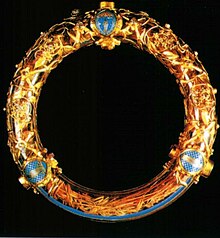
Radiocarbon test of the Crown of Thorns.
In 1238, Baldwin II, the Latin Emperor of Constantinople, anxious to obtain support for his tottering empire, offered the crown of thorns to Louis IX, King of France. It was then in the hands of the Venetians as security for a great loan of 13,134 gold pieces, yet it was redeemed and conveyed to Paris, where Louis IX built the Sainte-Chapelle, completed in 1248, to receive it. The relic stayed there until the French Revolution, when, after finding a home for a while in the Bibliothèque Nationale, the Concordat of 1801 restored it to the Church, and it was deposited in the Cathedral of Notre-Dame de Paris.
The relic that the Church received is a twisted circlet of rushes of Juncus balticus, a plant native to maritime areas of northern Britain, the Baltic region, and Scandinavia; the thorns preserved in various other reliquaries are of Ziziphus spina-christi, a plant native to Africa and Southern and Western Asia, and had allegedly been removed from the Crown and kept in separate reliquaries since soon after they arrived in France. New reliquaries were provided for the relic, one commissioned by Napoleon Bonaparte, another in jeweled rock crystal and more suitably Gothic, which were made to the designs of Eugene Viollet-le-Duc. In 2001, when the surviving treasures from the Sainte-Chapelle were exhibited at the Louvre, the chaplet was solemnly presented every Friday at Notre Dame. Pope Saint John Paul II translated it personally to Sainte-Chapelle during World Youth Day. The relic can be seen only on the first Friday of every month when it is exhibited for a special veneration mass and each Friday of Lent.
The Paris Fire Brigade members saved the relic during the Notre Dame de Paris fire of April 15, 2019
Share this:


History: Fiction or Science? Volume 8: Reconstruction of Chronology, Part of the series History: Fiction or Science? (29 books) by Anatoly T. Fomenko and Gleb W. Nosovskiy, Sep 3, 2023
Table of Contents Vol.8
History: Fiction or Science? A reconstruction of global history. The Great Empire’s legacy in Eurasia and America’s history and culture.: New Chronology; part 2 of vol.6 Paperback – October 31, 2022 (Chronology Volume 7)
Table of Contents V7
LOOK INSIDE History: Fiction or Science? Mediæval World Empire • Conquest of the Promised Land (New Chronology Volume 6)
LOOK INSIDE History: Fiction of Science?: Conquest of the world. Europe. China. Japan. Russia (Chronology) (Volume 5)
LOOK INSIDE History: Fiction or Science? Russia. Britain. Byzantium. Rome. New Chronology vol.4.
LOOK INSIDE History: Fiction or Science? Astronomical methods as applied to chronology. Ptolemy’s Almagest. Tycho Brahe. Copernicus. The Egyptian zodiacs. New Chronology vol.3.
LOOK INSIDE History: Fiction or Science? The dynastic parallelism method. Rome. Troy. Greece. The Bible. Chronological shifts. New Chronology Vol.2
LOOK INSIDE History: Fiction or Science? Dating methods as offered by mathematical statistics. Eclipses and zodiacs. New Chronology Vol.I, 2nd revised Expanded Edition.
Also by Anatoly T. Fomenko
(List is non-exhaustive)
- Differential Geometry and Topology
- Plenum Publishing Corporation. 1987. USA, Consultants Bureau, New York, and London.
- Variational Principles in Topology.Multidimensional Minimal SurfaceTheory
- Kluwer Academic Publishers, The Netherlands, 1990.
- Topological variational problems. – Gordon and Breach, 1991.
- Integrability and Nonintegrability in Geometry and Mechanics
- Kluwer Academic Publishers, The Netherlands, 1988.
- The Plateau Problem. vols.1, 2
- Gordon and Breach, 1990. (Studies in the Development of Modern Mathematics.)
- Symplectic Geometry.Methods and Applications.
- Gordon and Breach, 1988. Second edition 1995.
- Minimal surfaces and Plateau problem. Together with Dao Chong Thi
- USA, American Mathematical Society, 1991.
- Integrable Systems on Lie Algebras and Symmetric Spaces. Together with V. V. Trofimov. Gordon and Breach, 1987.
- Geometry of Minimal Surfaces in Three-Dimensional Space. Together with A. A.Tuzhilin
- USA, American Mathematical Society. In: Translation of Mathematical Monographs. vol.93, 1991.
- Topological Classification of Integrable Systems. Advances in Soviet Mathematics, vol. 6
- USA, American Mathematical Society, 1991.
- Tensor and Vector Analysis: Geometry, Mechanics and Physics. – Taylor and Francis, 1988.
- Algorithmic and Computer Methods for Three-Manifolds. Together with S.V.Matveev
- Kluwer Academic Publishers, The Netherlands, 1997.
- Topological Modeling for Visualization. Together with T. L. Kunii. – Springer-Verlag, 1997.
- Modern Geometry. Methods and Applications. Together with B. A. Dubrovin, S. P. Novikov
- Springer-Verlag, GTM 93, Part 1, 1984; GTM 104, Part 2, 1985. Part 3, 1990, GTM 124.
- The basic elements of differential geometry and topology. Together with S. P. Novikov
- Kluwer Acad. Publishers, The Netherlands, 1990.
- Integrable Hamiltonian Systems: Geometry, Topology, Classification. Together with A. V. Bolsinov
- Taylor and Francis, 2003.
- Empirico-Statistical Analysis of Narrative Material and its Applications to Historical Dating.
- Vol.1: The Development of the Statistical Tools. Vol.2: The Analysis of Ancient and Medieval
- Records. – Kluwer Academic Publishers. The Netherlands, 1994.
- Geometrical and Statistical Methods of Analysis of Star Configurations. Dating Ptolemy’s
- Almagest. Together with V. V Kalashnikov., G. V. Nosovsky. – CRC-Press, USA, 1993.
- New Methods of Statistical Analysis of Historical Texts. Applications to Chronology. Antiquity in the Middle Ages. Greek and Bible History. Vols.1, 2, 3. – The Edwin Mellen Press. USA. Lewiston.
- Queenston. Lampeter, 1999.
- Mathematical Impressions. – American Mathematical Society, USA, 1990.